
Top 10 Questions to Ask Before Hiring an Asbestos Inspector in Denver
There are very few home discoveries that ruin a person’s day faster than hearing the phrase:
“Yeah… that material could contain asbestos.”
Suddenly your simple flooring project turns into a full emotional support spiral involving Google searches, contractor opinions, and aggressively staring at popcorn ceilings like they personally betrayed you.
And then comes the next challenge! Finding an asbestos inspector you can actually trust.
Because just like every industry, asbestos inspection companies range from: “Highly trained environmental professionals” all the way to “Guy with a clipboard trying to just make a buck.”

If you’re hiring an asbestos inspector in Denver, Aurora, Lakewood, Centennial, Arvada, or anywhere in the Colorado Front Range, asking smart questions upfront can save you from unnecessary costs, bad information, delayed projects, and compliance headaches later.
This blog isn’t about giving you the “correct” answers to these questions or trying to sell Elevation Environmental Services to you.
It’s about us helping you understand why these questions matter when choosing a certified asbestos inspector.
Because when asbestos is involved, the stakes are a little higher than accidentally buying the wrong paint color.
1. “Are You State Certified to Perform Asbestos Inspections?”
This is the asbestos equivalent of asking a pilot if they’ve actually flown a plane before.
In Colorado, asbestos inspectors are required to hold certifications through the U.S. Environmental Protection Agency (EPA) and the Colorado Department of Public Health and Environment (CDPHE) for specific asbestos-related activities.
A legitimate inspector should understand:
State regulations
Sampling procedures
AHERA requirements
Chain of custody procedures
Material identification
Laboratory protocols
Regulatory reporting requirements
Why does this matters? An uncertified or improperly trained inspector can create serious project delays, invalid reports, failed clearances, or regulatory violations.
And unlike discovering your contractor installed tile crooked, asbestos mistakes can involve legal and health consequences.
If you’ve read our blog on Minor vs. Major Asbestos Spills in the Denver Metro Area: What’s the Difference and Why It Matters, you already know Colorado takes asbestos compliance very seriously.
2. “How Is Your Relationship With the State?”

This might sound like a strangely personal question at first.
You’re not asking whether they exchange holiday cards with regulators.
You’re asking whether the company has a professional, compliant working relationship with the Colorado Department of Public Health & Environment (CDPHE).
Why does this matters? A reputable asbestos inspection company should:
Understand Colorado Regulation 8
Maintain proper certifications
Submit accurate documentation
Stay current on regulatory updates
Handle projects professionally during audits or investigations
Companies with a history of compliance problems, poor documentation, or repeated state issues can create massive headaches for homeowners, contractors, and commercial property owners.
Especially in Denver-area renovation projects where permits, timelines, and compliance often move together like an angry little bureaucracy conga line.
A strong relationship with the state usually reflects professionalism, organization, and long-term credibility.
Fun Fact: Asbestos was once called the “magic mineral” because it resisted heat, fire, and chemicals. Unfortunately, humanity later discovered the “tiny airborne health hazard” side of the magic trick.
3. “Do You Also Perform Asbestos Abatement?”
This question helps homeowners understand conflicts of interest and shows if the inspector is following the law.
Why does this matters? Imagine if your mechanic also got commission bonuses for every engine replacement recommendation.
You’d probably want to ask a few extra questions before approving $18,000 worth of repairs because your windshield squeaked once.
The same logic applies here.
In the State of Colorado, the testing company, remediation company, asbestos removal company (abatement company) and general contractor legally have to be separate companies. Otherwise there were be a lot of rich abatement companies because everything would have asbestos.
Independent inspectors can help provide unbiased recommendations to other companies, especially during large renovations, demolition projects, or insurance claims, but can't do it themselves. The State requires and it's the ethical the right thing to do.
Our blog on How to Survive the Insurance Claim Circus (Step by Step Guide to Dealing with Asbestos, Mold and Insurance) explains why proper documentation and independent reporting can significantly affect claim outcomes.
4. “What Materials Do You Typically Sample?”
This question helps determine whether the inspector understands how asbestos appears in real-world building materials.
Many homeowners only think about popcorn ceilings when it comes to asbestos.
Meanwhile asbestos was historically used in:

Flooring
Drywall texture
Joint compound
Pipe insulation
HVAC materials
Roofing
Siding
Mastics
Window glazing
Heating systems
Ironing board covers
Ceiling tiles
Yes. Ironing board covers!
Humanity really committed to putting asbestos in absolutely everything for a while.
Why does this matters? An experienced inspector understands where asbestos is commonly found based on:
Building age
Renovation history
Material types
Construction methods
Fun Fact: Some older asbestos flooring mastics are still so durable that the glue outlives the actual floor installed over it. At this point the adhesive is basically surviving out of spite.
5. “How Many Samples Do You Typically Collect?”
This question isn’t about quoting the highest number possible, but truly testing if the inspector knows the regulation and what is absolutely required by the State.
The number of samples is based on the type of material and for some, square footage. A good inspector should know a rough idea of how many samples they are going to need or, at a minimum, say they might need to walk the project provide an estimate.
The important thing is whether the inspector follows proper regulatory sampling requirements and reports the samples accurately.
Why does this matters? The State has tight guidelines on what needs to be sampled and how many samples. Not collecting the correct amount of samples can cause delays in the project.
A knowledgeable asbestos inspector should understand:
Homogeneous sampling areas
Material variations
Regulatory minimums
Laboratory accuracy
When additional sampling is warranted
This becomes especially important during demolition and renovation projects throughout Denver’s older neighborhoods where multiple remodel layers may exist beneath newer finishes.
Our blog about Essential Asbestos Testing: How Many Number of Samples Are Required in Colorado? shows how many samples are required from the CDPHE Regulation 8 itself. Feel free to use it on your call with the inspector.
6. “Do You Provide a Written Report?”
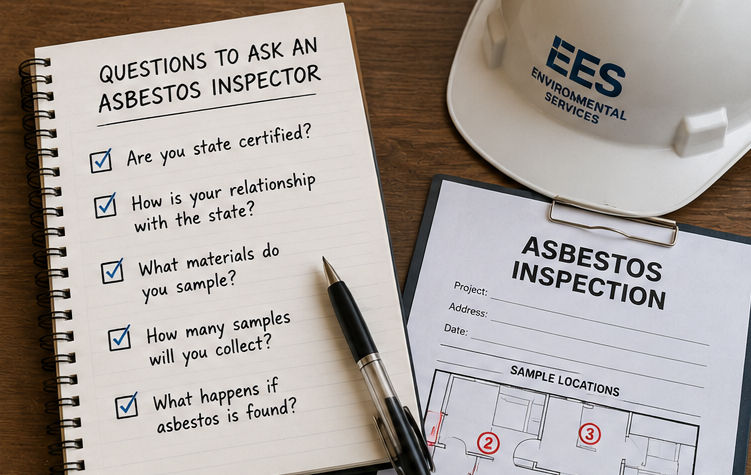
If your asbestos inspection results are delivered on a sticky note saying: “Probably asbestos. Good luck.”…you deserve better documentation.
A proper asbestos inspection report must include:
Sample locations
Material descriptions
Laboratory results
Regulatory recommendations
Quantity of samples
Friability
Condition
Category Type
Why does this matters? Just like sampling requirements, the CDPHE also has a listed of what is required to be in a formal asbestos inspection report. If the inspector skips those, then the State may deem the report invalid.
A bad report doesn't just mess with the State, but also:
Renovation projects plans
Demolition permits
Real estate transactions
Insurance claims
Contractor coordination
State compliance reviews
Especially in commercial properties where documentation requirements become significantly stricter.
7. “How Long Have You Been Performing Asbestos Inspections?”
Experience matters in asbestos investigations because older buildings are weird. And Denver buildings are especially weird.
You’ll find:
Hidden remodel layers
Mixed materials
Historic repairs
Covered-over finishes
“Creative” contractor decisions from 1974
Why does this matters? Experienced inspectors are often better at:
Identifying suspect materials
Understanding building eras
Recognizing hidden concerns
Avoiding unnecessary panic
Communicating practical next steps
And honestly, sometimes experience mostly helps because the inspector has already seen things that make them impossible to surprise anymore.
8. “What Laboratory Do You Use?”

Not all asbestos laboratories operate at the same level.
Inspectors should use accredited laboratories that follow recognized testing procedures.
Why does this matters? Laboratory quality directly affects:
Accuracy
Turnaround time
Reliability
Documentation standards
CDPHE and EPA requires asbestos samples to be analyzed by a lab that is part of National Voluntary Laboratory Accreditation Program (NVLAP). So no....Amazon asbestos testing kits don't count. A strong inspector-lab relationship also means better communication, fewer reporting errors, and smoother project timelines.
Because nobody wants a renovation delayed while waiting for a sample result that somehow disappeared into the laboratory void.
Fun Fact: Asbestos fibers are microscopic. Which means the thing causing all the project stress is literally too small to see without specialized equipment. Tiny problem. Massive paperwork.
9. “Do You Understand Colorado Demolition and Renovation Requirements?”
This question is incredibly important for contractors and property owners.
Colorado asbestos regulations often apply before:
Renovations
Demolitions
Commercial remodels
Multi-family work
Certain residential projects
Why this matters? Missing required inspections or notifications can create:
Project shutdowns
Fines
Delays
Failed permit processes
Liability issues
A knowledgeable inspector should understand when state notification requirements apply and how inspections fit into larger project timelines.
Especially in Denver metro construction where schedules already operate under the emotional stability of a Jenga tower.
Curious about what goes into a demolition here in Colorado? Our article Colorado Demolition Checklist (a.k.a. How Not to Get Fined, Sued, or Arrested While Taking Down Your Building) breaks it down for you.
10. “Can You Explain the Difference Between Damaged and Non-Damaged Asbestos?”
This is one of the best questions homeowners can ask because asbestos itself is often misunderstood.
Not all asbestos-containing material automatically creates immediate danger.
Condition matters.
Disturbance matters.
Friability matters.

Why does this matters: A good inspector should help homeowners understand:
Intact vs. damaged materials
Friable vs Non-Friable
Risk during renovation
Encapsulation options
Monitoring vs. removal
Regulatory requirements
Practical next steps
Because sometimes the safest solution is controlled management — not immediate demolition of half the property.
Fun Fact: Popcorn ceilings became wildly popular partly because the texture helped hide drywall imperfections. Which means asbestos ceilings were basically the original cosmetic filter.
Choosing the Right Asbestos Inspector in Denver
Hiring an asbestos inspector shouldn’t feel like trying to decode a secret government operation while renovating your basement. And an inspector can either make the project go smooth sailing or a complete nightmare from start to finish. So choose wisely.
As for Elevation Environmental Services? We focus on:
Education
Clear communication
Regulatory compliance
Accurate sampling
Practical guidance
Honest recommendations
Because asbestos inspections aren’t just about collecting samples. They’re about helping homeowners, contractors, and property managers safely navigate renovations, demolitions, and environmental concerns without unnecessary panic or expensive mistakes. Especially here in the Denver Metro Area.


Comments